

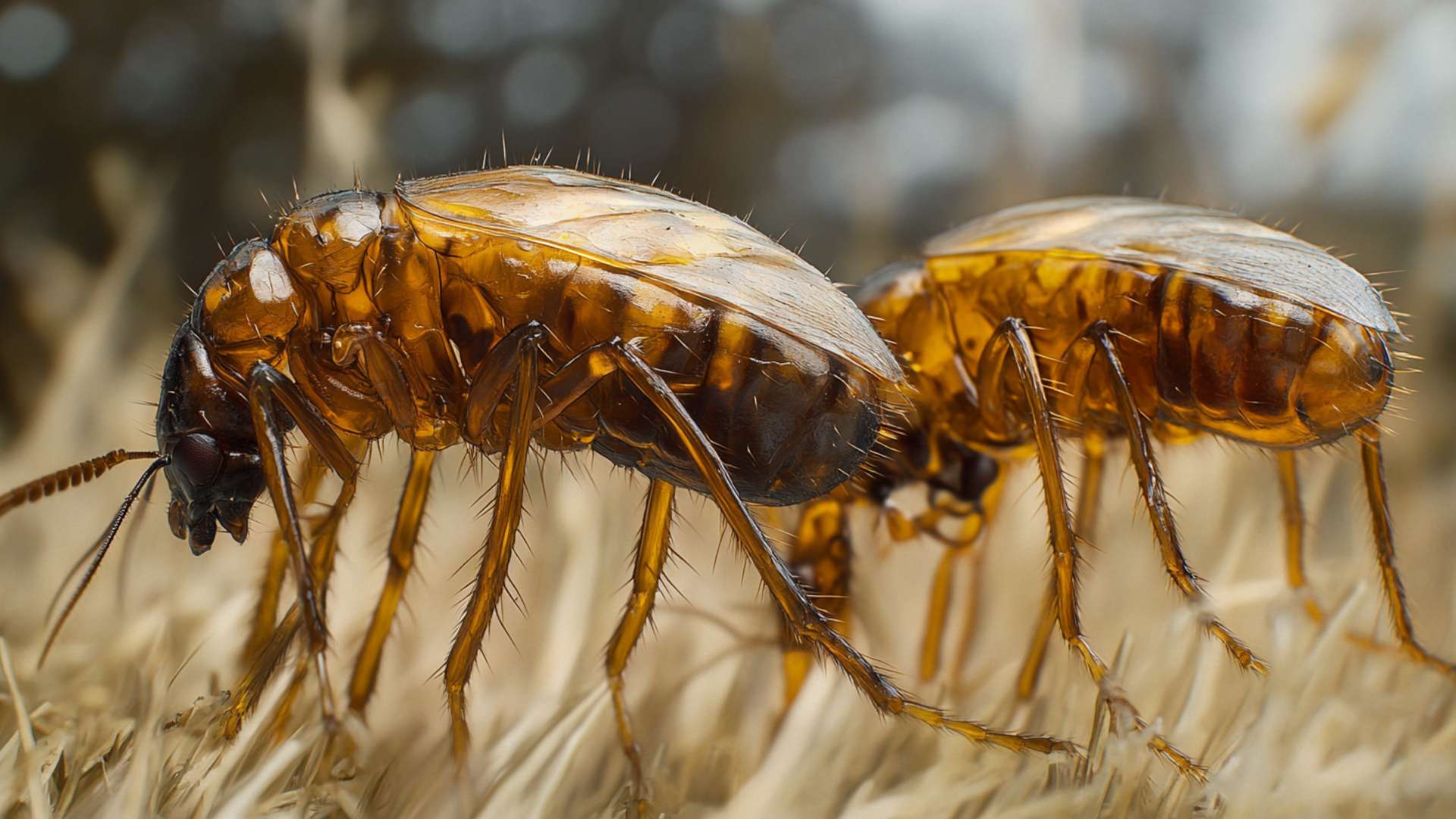
Fleas are blood sucking insects that can be seen at many places. They are good hitchhikers, and that is one of the ways they can get inside your home. In Sheridan, fleas can be found in many areas, and their infestation is not uncommon either.
You can take precautionary measures to prevent them from entering your house in the first place. However, it may not always help. If they have already made it to your place, then you need to think of what to do next. There are many things that you can do to get rid of them.
These insects are tiny in size, which is why spotting them can be difficult. However, it is not impossible. Fleas bite humans and animals both and that is how they suck the blood which is their meal. They need to feed on blood in order to stay alive.
These are parasites that live on the outside or exterior of the host’s body. They are also known for spreading various diseases, which is why their infestation cannot be tolerated. Click here to learn more details about these parasites.
What is their lifecycle like?
There are different stages that can be observed in their lifecycle, and we will look at them briefly here:
Egg:
Females are known to lay about twenty-five eggs in a single day. They are about the size of a grain of salt, which means you can expect them to be really small.
Larval stage:
Then come the larvae, which are again really small and somewhat resemble worms. They come out from the flea eggs.
Pupa:
Larvae remain inside the cocoon to continue their development. At this time, they are called pupae. These pupae can stay in their cocoon for days or for a week.
As soon as they get a hint that a human or an animal is nearby, they start to turn into adult fleas. You might be wondering how they detect the presence of humans and animals. It is through the body heat that their presence can also be given away.
What should you know about their parasitic nature?
There are different types of fleas, and some of them can be really specific when choosing their host. Shrew fleas and Rabbit fleas are the two fleas that you need to keep in mind in regard to this. Cat fleas are not limited to infecting cats only. They can also infect leopards, opossums, foxes, etc.
You need to be careful, as they can also infect humans when no other regular host is available. Bird fleas are also there, which have become much more adaptable and have started going after different birds to get blood.
One interesting thing that you can note about fleas is that they do not infect apes and monkeys. Horses are in the same category as well. Those animals that do not really have a permanent place to live will tend to have fewer fleas than others.
They are also known to live in extreme temperatures. For instance, if you look at rabbit fleas, they can survive in frigid temperatures (almost near freezing point) for months. They do not even need to feed themselves during this time.
What are some general features of these parasites?
These are tiny insects that may not come to your notice until you look closely. They do not possess wings either, and their spines are flat. Adult fleas among them are about 0.13 inches in size. Their species is small compared to other groups of insects. They have around two thousand species.
They are also distributed on a large scale, including rat and mouse fleas. They are carried to different parts of the world by humans. Another thing about them that you should know is that the adult fleas prefer to feed on humans and birds.
Get rid of these fleas as soon as you can. Pest control companies can help with this. They have the tools and knowledge to deal with different pests.